
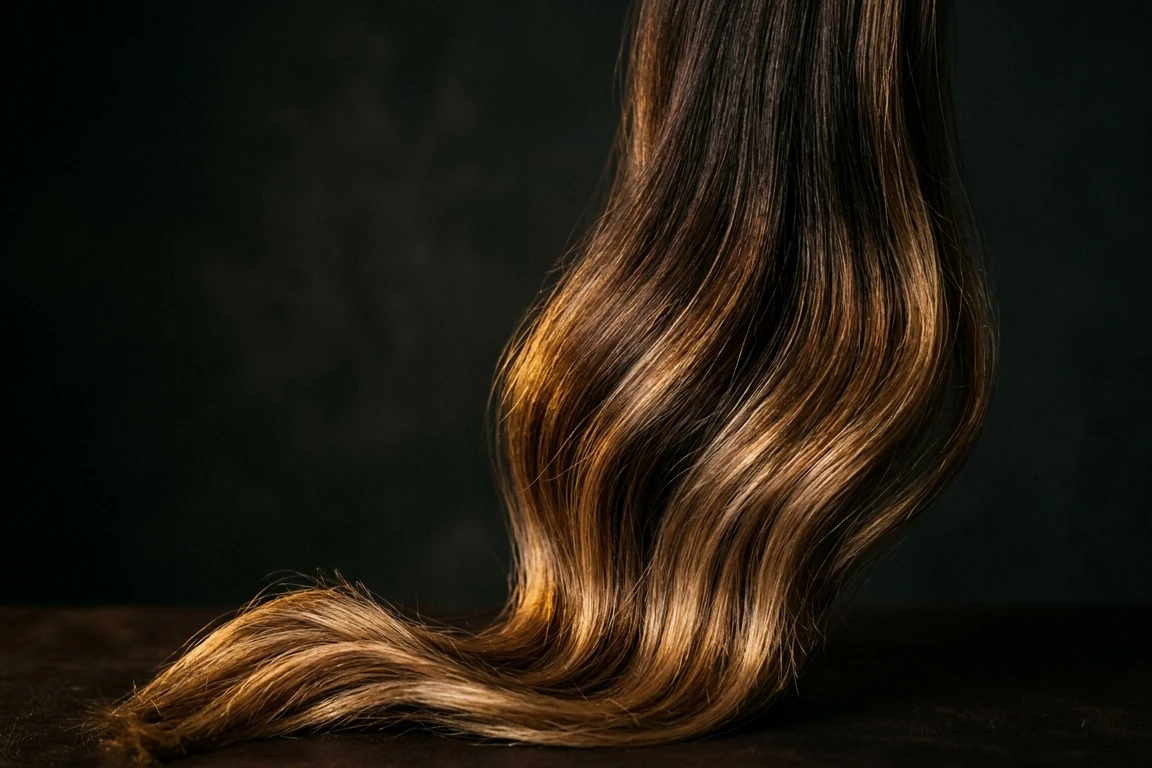
When two wigs that look almost identical differ several times over in price, every woman asks the natural question: what am I paying for? Almost always it comes down to one thing — the hair. Not the brand, not the packaging, but exactly what grows from the cap. Let me explain the kinds of hair there are, how they differ and, above all, how to tell the difference before you hand over your money.
Why the price varies so much
A wig can cost a couple of thousand or fifteen — with a similar look on the shelf. It's down to the raw material. High-quality natural hair is a rare and costly resource: it's gathered in whole strands, keeping the direction of growth, and barely touched by chemicals. The more the hair has been treated to give it a sellable look, the cheaper it is — and the less predictably it behaves. And synthetic is cheapest of all, because it isn't hair at all.
Natural hair — the gold standard
This is what I work with by default. Good natural hair behaves like your own: you can wash it, style it, have it tinted by a professional when needed. It falls naturally, comes alive in the light, and doesn't give the wig away up close. Such hair lasts for years and doesn't "cheapen" over time — on the contrary, with gentle care it holds its shape and living shine for a long while.
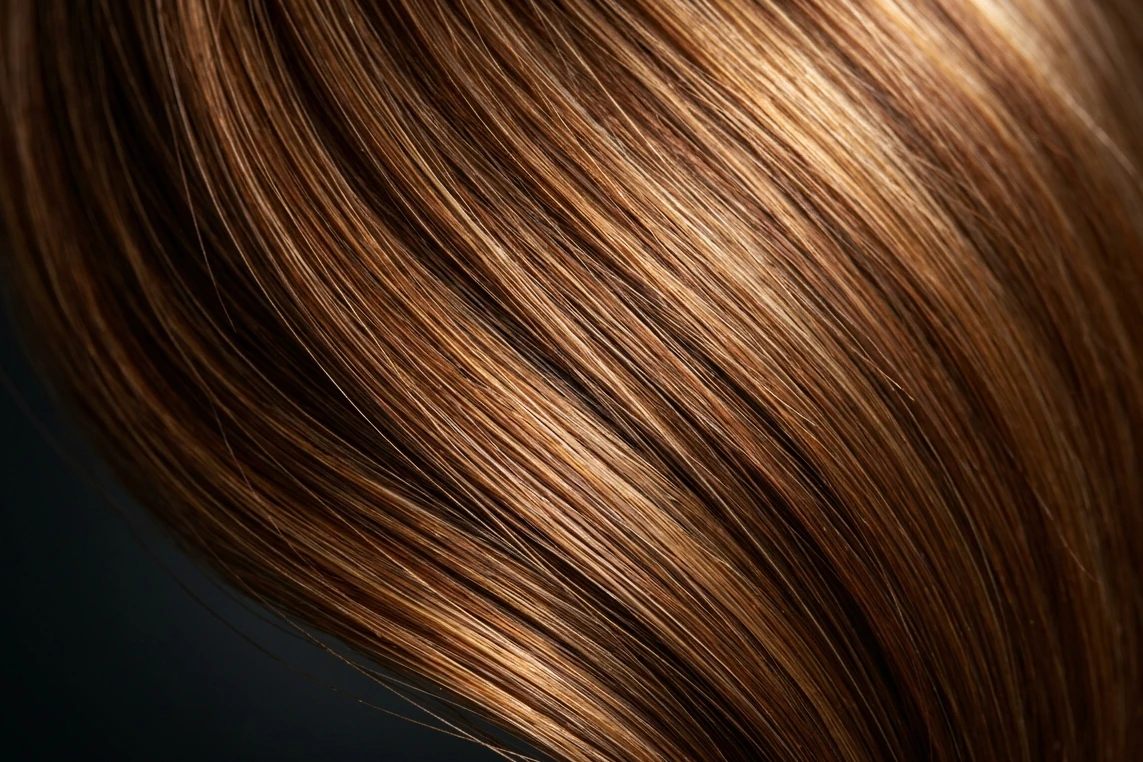
The finer points of care — washing, drying, storage — are a big topic of their own; I'll cover them in a care article. Natural hair has its own grades by origin and quality, and price follows from that. But even within the natural category a worthy option can be found across different budgets — something we always talk through in person.
Processed hair — saving with a risk
Here's where the important part begins, and it's rarely said plainly. Processed hair is also natural hair, but low quality to begin with. To make it sellable, its look is chemically improved: it's given shine, the colour is evened out, and sometimes the structure itself is changed — curly hair straightened, or straight hair curled.
On the shelf it looks lovely. The trouble is that the improvement is temporary, and such hair behaves unpredictably. A curly wig may go straight after just a few washes. The shine can fade within a couple of months. And hair straightened with keratin holds a style poorly: curling it for an evening barely works — the curls drop and straighten out within hours. Sometimes that's exactly what's wanted (you wanted straight, you got straight), but if you later fancy a change, it won't be there. There's no telling in advance how a given wig will behave. So it's more honest to call things by their name: buying processed hair, you're buying not a guarantee but a gamble.
That doesn't mean "never." Some women deliberately buy several inexpensive wigs and wear them in rotation — for them it's a sensible choice, and I understand it. The decision just needs to be a conscious one. I work with processed hair only by separate arrangement, and I set out the risks beforehand — so there's no disappointment later.
With a custom wig I don't offer "the most expensive by default." We look together at what suits your way of life and budget, and I tell you plainly where saving makes sense and where it leads to disappointment. How the work unfolds is on the custom wigs page.
Synthetic hair — why I don't work with it
Synthetic hair is fibre, not hair. It's not only the look, though up close and in movement the difference shows at once: an unnatural shine, every strand identical, a telltale "plastic" behaviour. The main problem is in the wearing. Synthetic doesn't let air through: the head feels hot and stuffy under it, especially in the Israeli climate. It can't be styled with heat, it copes badly with heat, and it loses its look quickly.
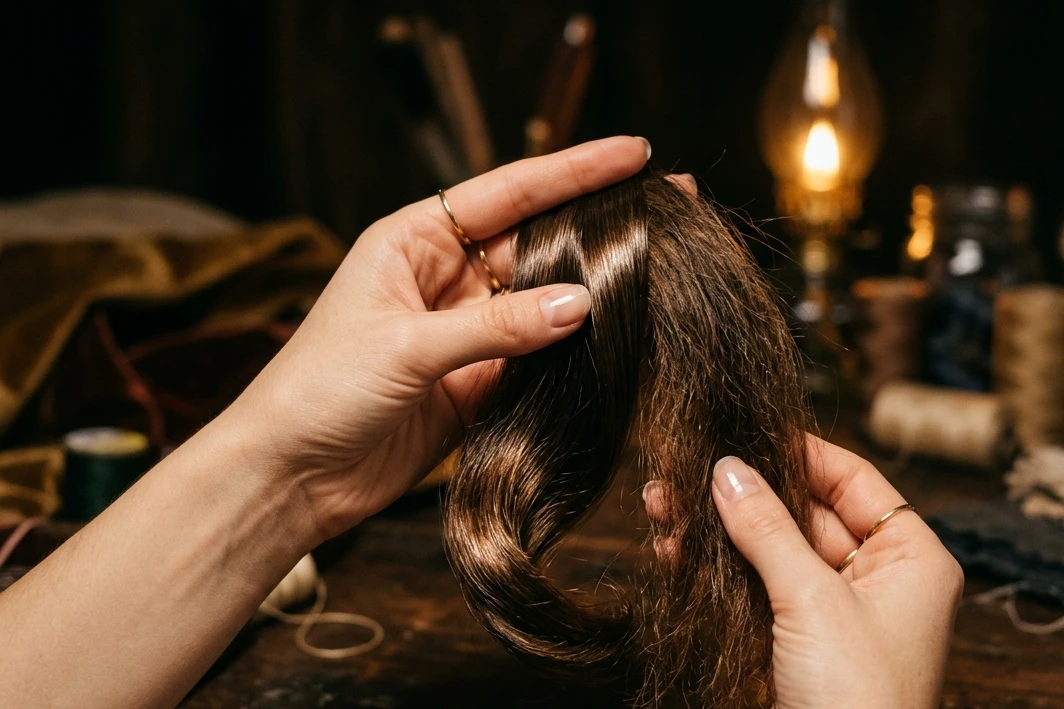
For a costume or a rare one-evening look, synthetic has its place. But for a wig worn all the time, as part of yourself, it doesn't suit. My aim is for you to forget you're wearing a wig — not to long to take it off as soon as you can.
How to tell the difference before you buy
A few signs you can notice yourself, even without experience:
- Shine. Natural hair shines softly and unevenly. A too-even, "glassy" shine along the whole length is reason to look more closely.
- Colour. Living hair has shifts of tone. A perfectly uniform colour often means heavy processing.
- To the touch. Natural hair feels like your own; synthetic is noticeably stiffer, closer to fishing line.
- Smell when heated. We all know what singed hair smells like — synthetic, when heated, smells of burnt plastic. The difference is unmistakable.
There are a few more checks by which a master gauges the quality of hair before buying. Telling good natural hair from well-processed hair for certain, from a photograph, is all but impossible: too much comes down to the details.
In short
To put it briefly: natural hair is the foundation and the best choice for everyday; processed is an acceptable saving, but with eyes open and an understanding of the risks; synthetic is for an evening look, not for life. The gap in price isn't a "mark-up" but an honest reflection of how close the material is to your own hair.
And if you're unsure what's in front of you — better to find out in advance than to work it out afterwards. At a consultation I'll show you the difference in person, on samples, and advise what suits you.