It usually starts with two questions: what length and what colour. That's a natural place to begin — it's how we picture our future look. It's just that behind those two there are a few more things that matter every bit as much for whether you'll be happy wearing the wig day after day. I'll walk you through them here, so you come to your decision already knowing what to look for.
Where the choice really begins
With how you'll live with this wig. Every day, or for special occasions? Will you style it yourself, or would you prefer the least fuss possible? Do you spend long hours in the sun? The answers decide the cap type and the density — an everyday wig and an occasion wig are built differently, even when they look alike.
And about budget, right away — it's a normal part of the conversation, not an awkward one. Natural hair comes in several tiers, and a beautiful wig can be put together across a wide range of prices. Once the limits are clear, it's easier to look straight at what actually fits.
The kinds of hair
It's worth knowing about three options here, because the gap in price between them is large — and behind that gap is a difference in quality.

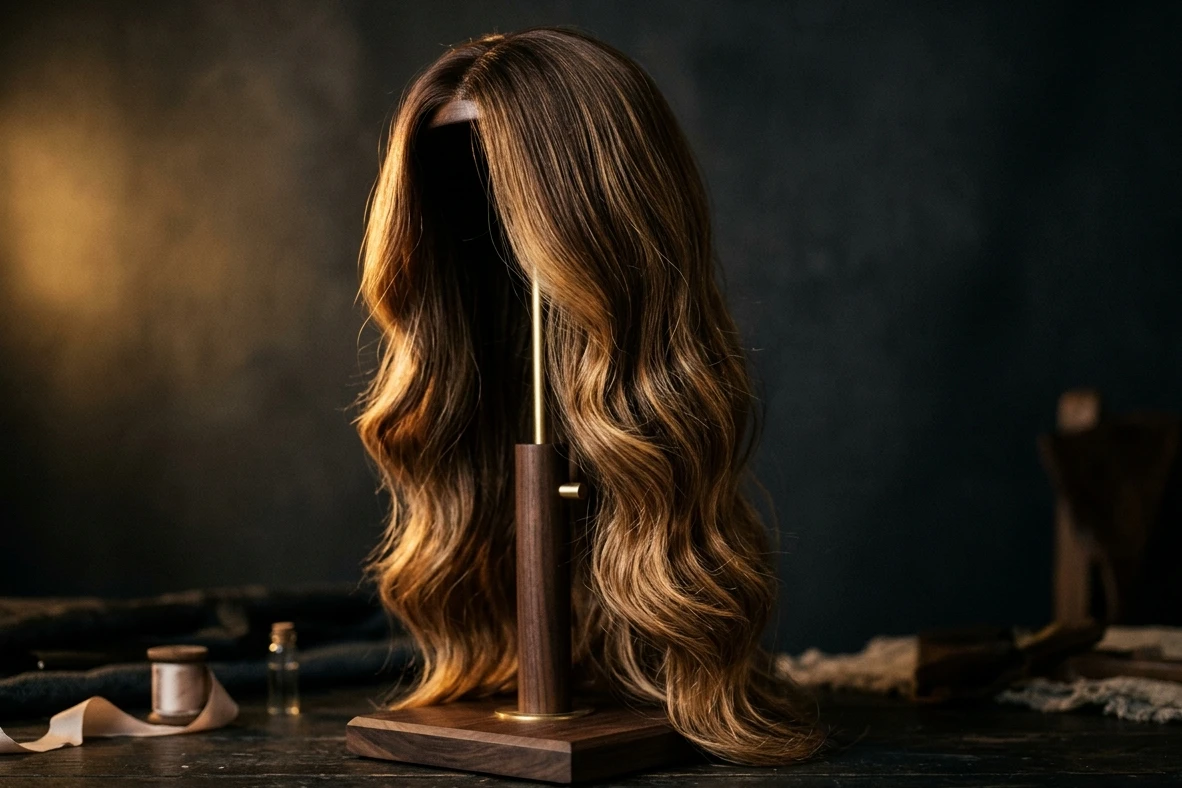
Good-quality natural hair is what's most pleasant to work with and to live with. It behaves like your own: you can wash it, style it, tint it if you wish; it falls naturally and looks beautiful in the light.
Processed hair is also natural, but low quality to begin with: its appearance has been chemically improved, or its structure changed — straightened, say, or curled. It's noticeably cheaper, and that's the whole point — but so is the risk. Such hair behaves unpredictably: a curly wig may go straight after just a few washes, and the shine may fade within a couple of months, leaving dry, lifeless strands. Sometimes you're lucky and get a decent piece, sometimes not. That's why I work with processed hair only by separate arrangement — and I always say honestly that you're buying not a guarantee, but a gamble.
Artificial hair — synthetic. I don't work with it: it doesn't give the feel of real hair, and for a wig worn all the time it simply isn't suitable.
More on the difference in a separate article; in short the rule is this: natural is the standard, processed by agreement, synthetic never.
With a custom wig I choose the hair type, the cap and the shape for you personally — rather than fitting you to a ready-made piece. How the work unfolds, from the first measurement to the finished wig, is on the custom wigs page.
Cap and fit
It's the cap that makes a wig invisible. It governs the fit and the look in the places seen most closely — along the hairline and at the parting. A good cap and a precise fit are the main reason a wig doesn't look like a wig.
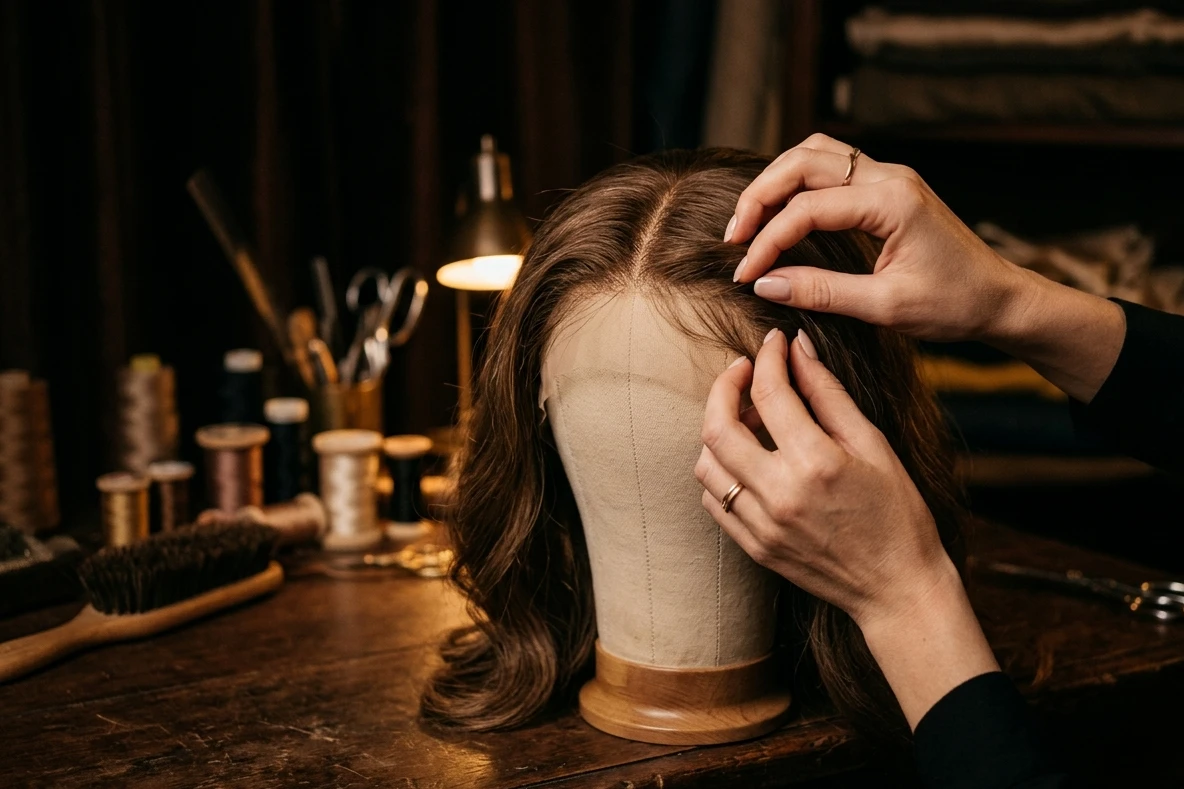
What to watch for: how invisible the parting is, whether the cap breathes (this matters in the heat), how comfortable it is around the circumference. The subtlety is that the right cap depends on the shape of your head and your way of life, so it's settled at the fitting — seen in person, it's clear at once.
Shade and length
There's a lovely detail about colour: natural hair is almost never a single tone. A living colour always has shifts — warmer and cooler strands — and that's exactly what makes it look natural. So a shade chosen in person almost always looks better than one picked from a picture on a screen.
With length, it's worth thinking ahead — not "shorter or longer," but how you'll wear it. If you're planning a ponytail, a bun, a braid or hair pinned up, you'll need length and density to spare: what falls beautifully when loose can turn out too short or too thin in a ponytail. Easier to allow for it from the start than to regret later that a favourite style won't come together.
So, what to choose?
Putting it all together: first, how you'll wear the wig; then the hair type within your budget; then the cap and fit; and only at the end the length and colour. In that order the choice falls into place on its own, and each next decision becomes clearer.
And if something is still unclear — that's perfectly normal; it's what masters are for. You can come to a consultation simply with a sense of how you'd like to look, and we'll work it all out calmly together, in front of the mirror.